Make Android feel like a workstation
Re:T-UI is a command-first Android launcher: part home screen, part terminal desk, part configurable control panel. This page shows what the launcher is and where to start; the deeper walkthroughs stay separate so the showcase stays clean.
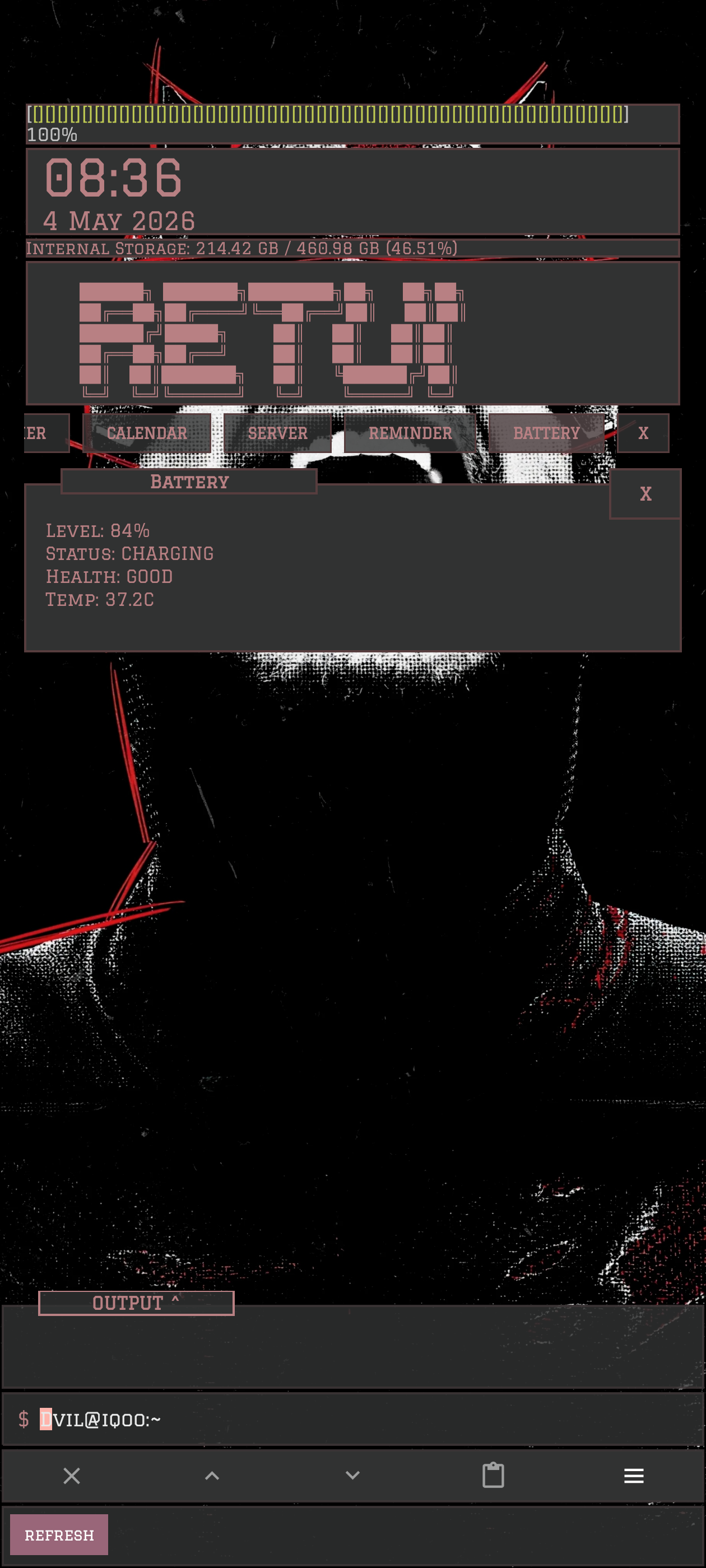
The home screen is also the command line.
When Re:T-UI opens, it drops you into a terminal-style launcher. You can launch apps by name, type commands directly, use suggestions under the prompt, or open friendly surfaces such as settings and files.
The fastest way to learn the shape of the system is still the simplest terminal move: type help. For a focused explanation, type help <command>, such as help alias, help wallpaper, or help apps.
$ help wallpaper
$ settings
$ files
Choose the path that fits your situation.
Re:T-UI is available as a paid Play Store build for people who want the simplest install path and want to support development. A free GitHub APK is also available for users who cannot pay, do not want to pay, or prefer to install directly from the project.
Play Store
Buy the launcher here if you want the easiest install/update path and want to support ongoing Re:T-UI work through the store purchase.
Open Play StoreGitHub download
Use this path to get the launcher for free if you cannot pay, do not want to pay, or prefer to install the APK directly from GitHub releases.
Download APK from GitHubBrowse terminal looks in the preset marketplace.
Community presets are curated palette and wallpaper combos exported from Re:T-UI. The marketplace has its own page so the homepage stays focused, while Cloudflare handles uploads, moderation storage, and approved downloads.
Preset marketplace
Open the dedicated gallery to browse approved screenshots, inspect compatibility, and download visual shareable configurations.
View presets in marketplaceCreate a shareable look
In Re:T-UI, open Settings, go to System & Support, choose Create Shareable Configuration, then pick the current active look or a saved preset.
Submit a look
Upload the shareable configuration file with a real screenshot. Add the wallpaper image separately when the look depends on it.
Upload presetMemorize a few commands, then let suggestions carry the rest.
Re:T-UI rewards a small starter vocabulary. Once those commands are familiar, aliases and suggestions can turn longer workflows into short words you actually remember.
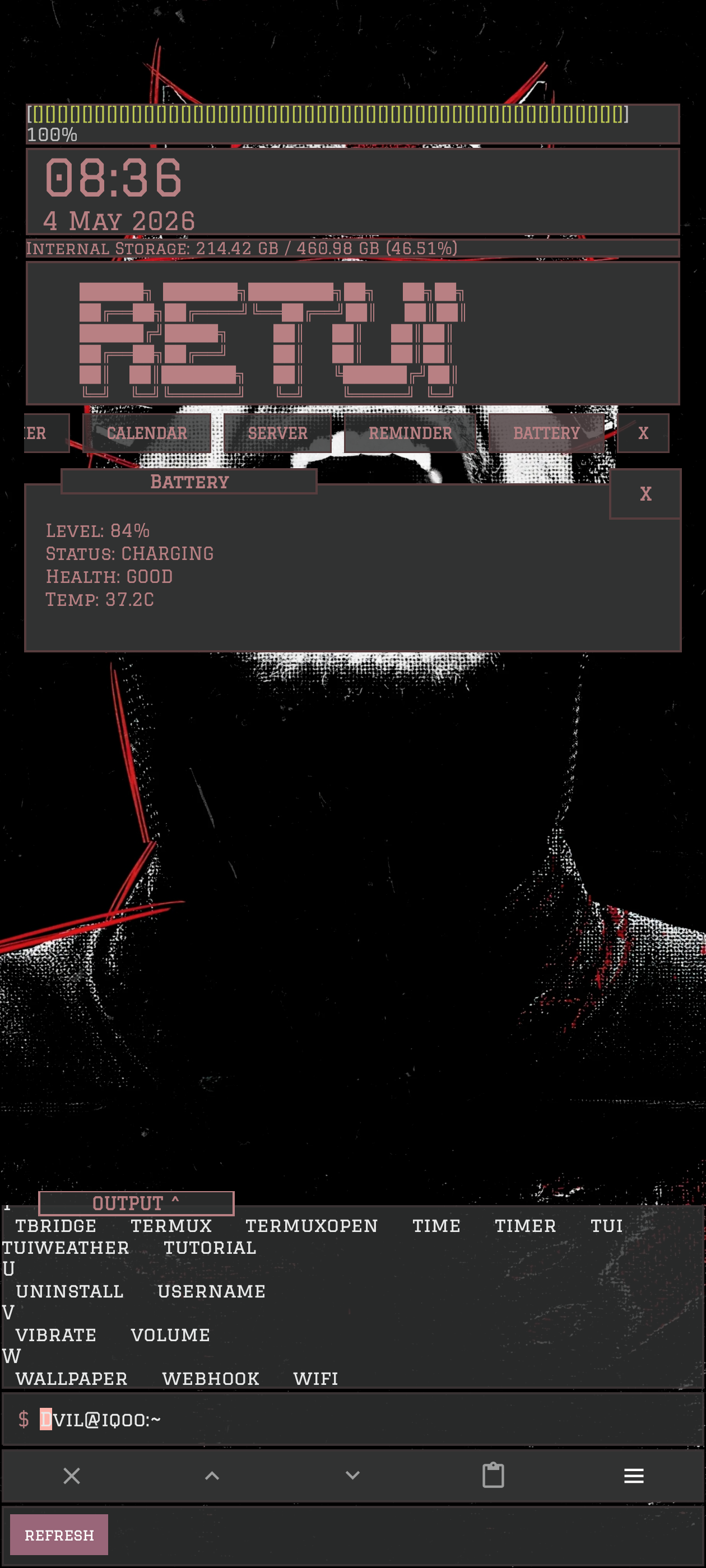
settingsOpen the terminal-style settings hub for appearance, behavior, integrations, fonts, and presets.
filesOpen Re:T-UI Files for navigation, opening, sharing, and future config editing.
apps -lsInspect app visibility, details, groups, and drawer state.
wallpaper -autoDerive a coordinated theme palette from the current wallpaper.
preset -save nameSave a stable theme snapshot after you like the look.
alias -add ll apps -lsCreate short commands for workflows you repeat often.
search -gg queryLaunch web searches without leaving the command-first flow.
widget -add focusCreate launcher-native Lua widgets with persistent prefs, local files, actions, and config surfaces.
termux -setupPrint the checklist for script dispatch through Termux.
debug -settingsInspect effective runtime settings when the UI does not match what you expected.
Build widgets that feel native to the launcher.
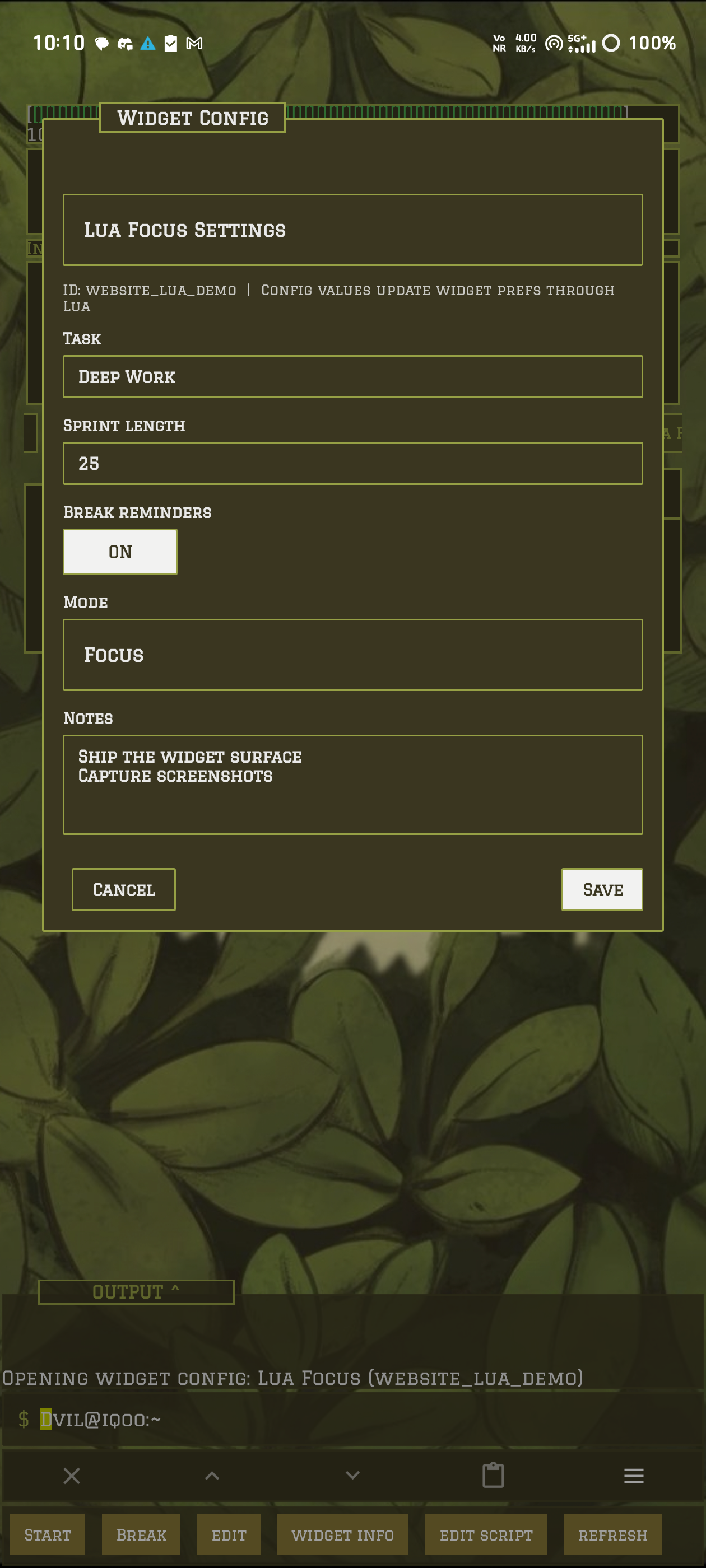
Lua widgets run inside Re:T-UI, render into the module dock, and keep state in widget-owned storage. They are for small, inspectable tools: timers, todos, status panels, quick actions, note pads, and suggestion scripts.
The runtime keeps a firm boundary between the live preview, user-facing config, and source editing. edit opens a widget config surface when the script provides one; edit script opens the Lua source editor.
widget -add focus_sprint, paste Lua, then Save/Run.widget -check focus_sprint checks render output and config schema.widget -config focus_sprint opens text, number, toggle, select, or textarea fields.prefs; larger notes or JSON go into widget-local files.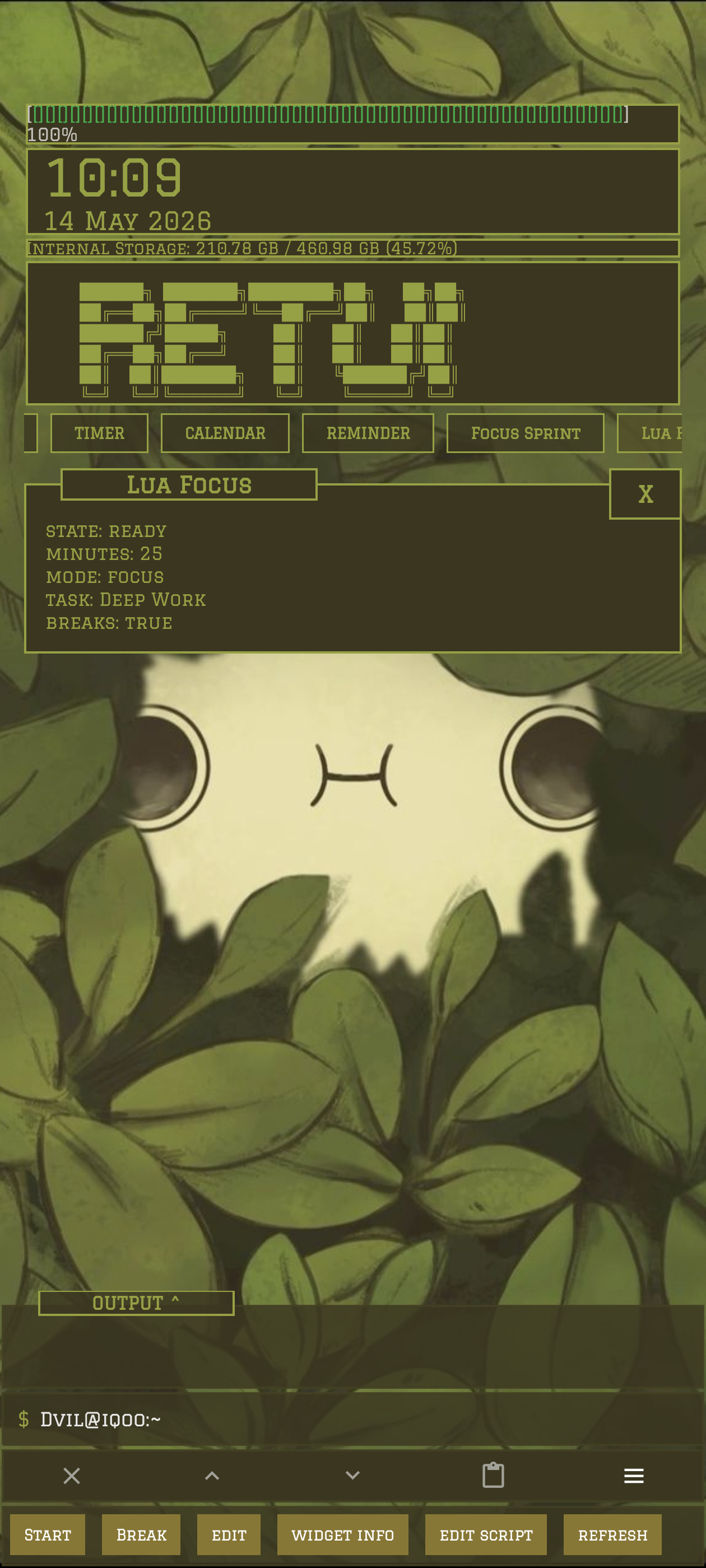
Use the settings hub first. Keep the files for power moves.
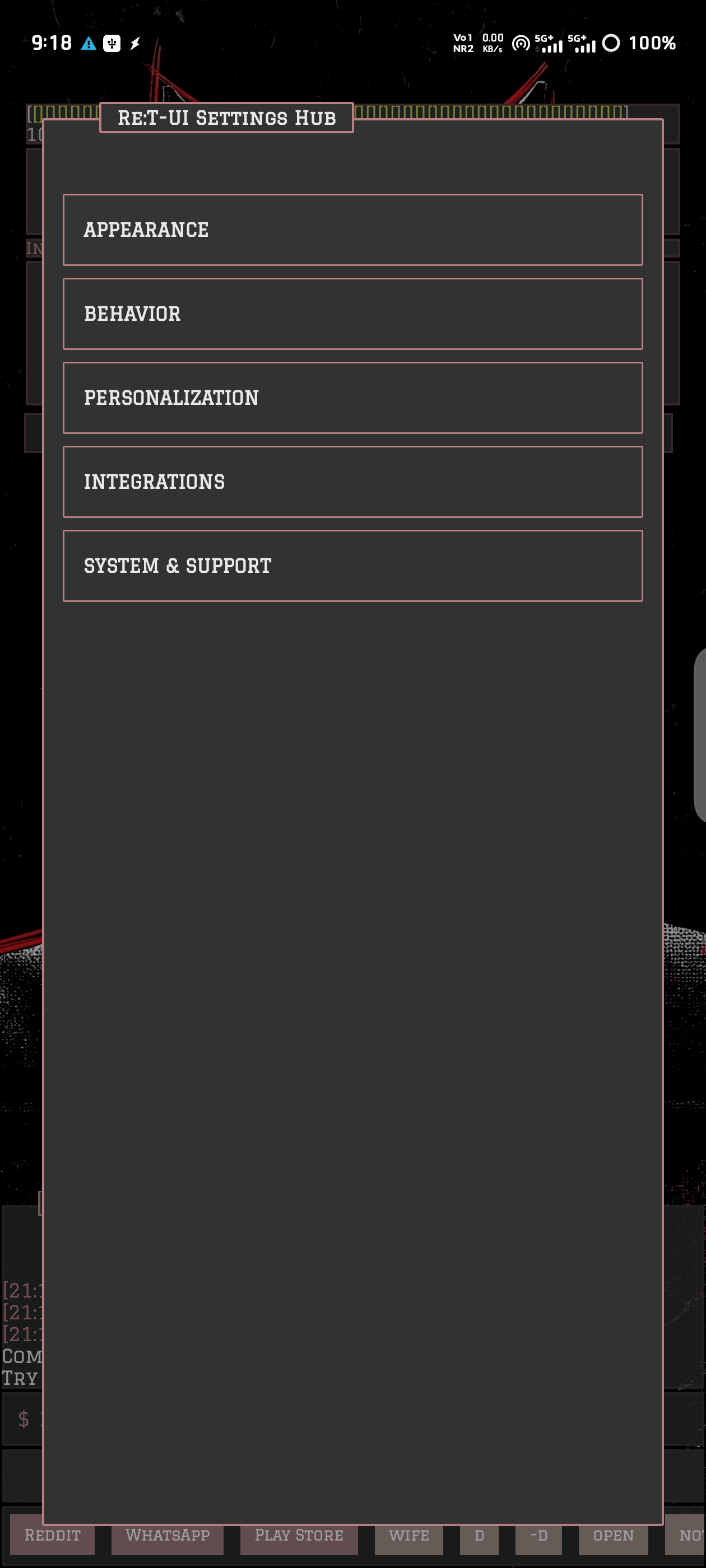
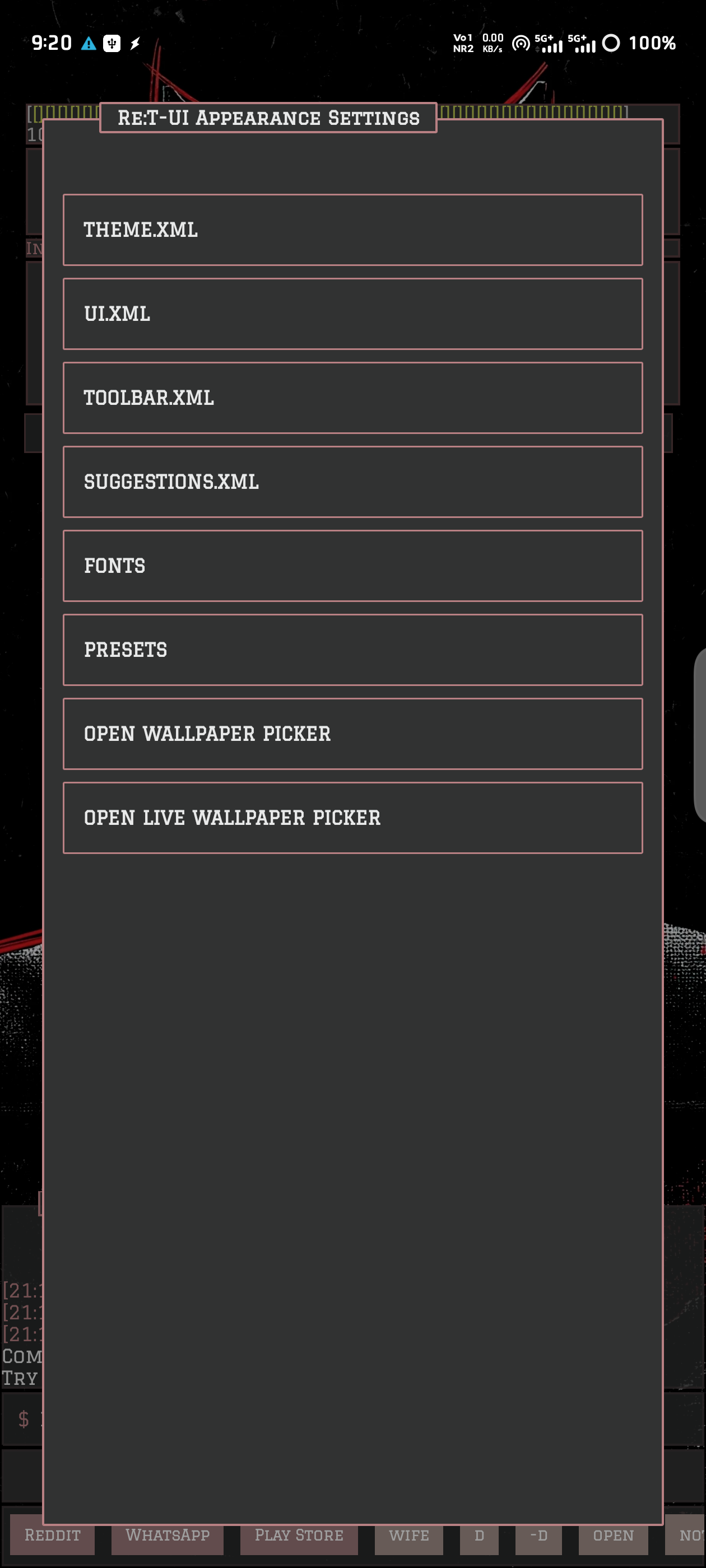
The settings hub is the friendly front door. It keeps Re:T-UI's terminal styling while grouping setup into Appearance, Behavior, Personalization, Integrations, and System & Support.
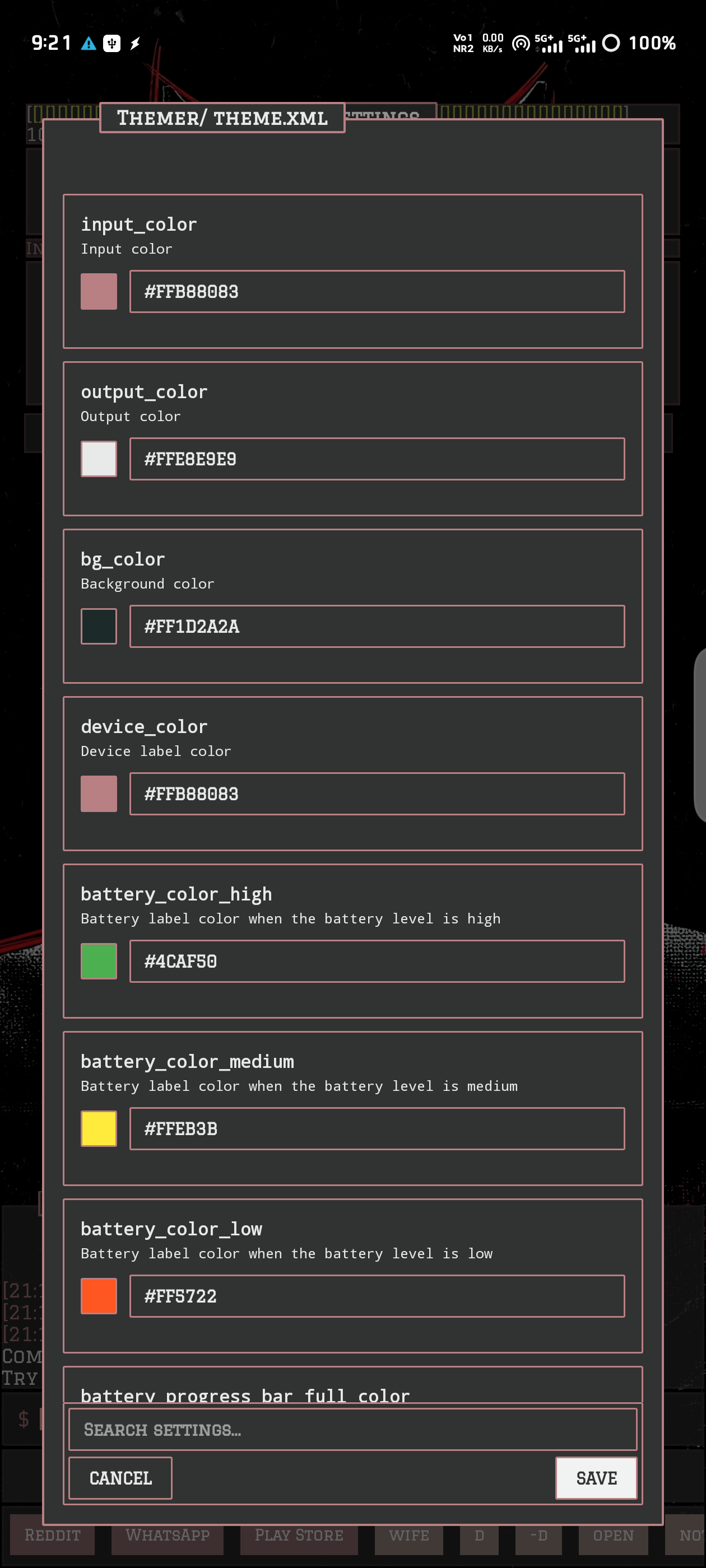
Power users can still edit the Re:T-UI folder directly. Important files include theme.xml, ui.xml, behavior.xml, notifications.xml, apps.xml, cmd.xml, alias.txt, and ascii.txt.
wallpaper -auto, tweak colors, then save with preset -save name.restart for a clean visual reload.debug -theme or debug -settings when saved values and runtime behavior disagree.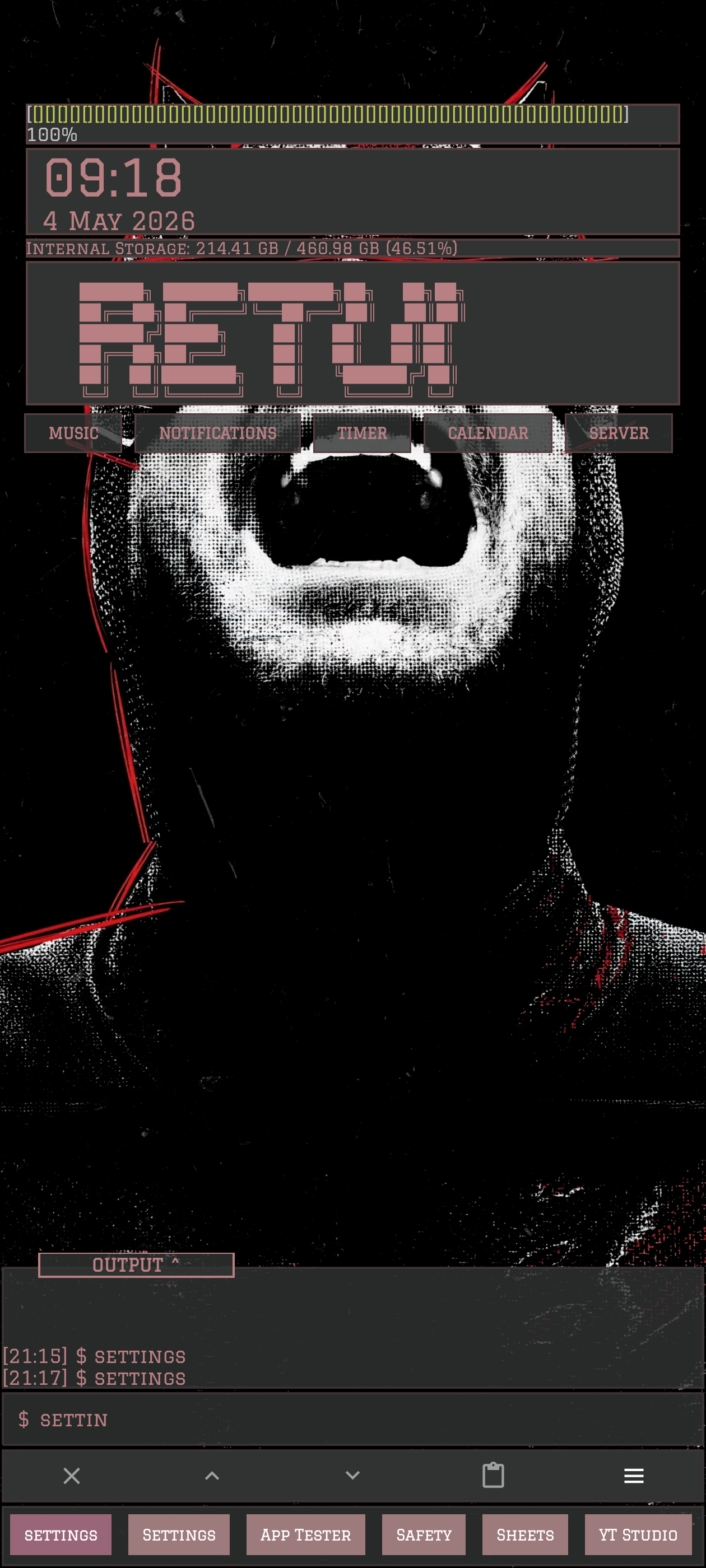
Re:T-UI can dispatch scripts, but Termux remains the real shell.
The launcher is designed for non-interactive script runs. Use termux -run for scripts that print output and exit. Open Termux directly for editors, SSH, REPLs, and long interactive work.
TBridge handles Termux diagnostics, script runtime support, callback/token tests, and future helper installation. Re:T-UI Files handles file navigation.
termux -setup, then enable external commands in Termux properties.~/retui and make scripts executable.alias -add -s name path, then run termux -run name.Automation should stay inspectable. Prefer aliases, scripts, callbacks, and webhooks that the user can read and edit.
Callbacks are token-gated and narrow. Re:T-UI accepts safe actions such as output and notify. It does not accept arbitrary external command execution through callbacks.
Use the stable build, test the next build, or help shape the project in public.
Re:T-UI stays public because the launcher benefits from open development. The Play Store build is the polished everyday channel, while GitHub is the best place for issues, documentation, and reproducible reports.
Stable release
The Play Store build is the official consumer release and the cleanest normal-user path. Buying there is the simplest way to support ongoing development.
Donate command
Inside the launcher, run donate. Re:T-UI opens the current support destination from the app itself, so the link stays aligned with the installed build.
Free add-ons
Re:T-UI add-ons stay available through GitHub. Start with Re:TUI-FM for companion functionality without a separate purchase.
GitHub testing
Use GitHub issues for reproducible bugs, test notes, and release feedback before changes become stable.
GitHub and guides
Read the source on GitHub, browse the widget guide and module guide, and use public issues for reproducible bugs.
Community testing
Small reports matter most when they include the command used, the visible output, the Android version, and whether the build came from Play Store or a local test build.
Privacy policy
Read the privacy policy for camera, notifications, contacts, calendar, phone, location, Termux, backup, and preset behavior.
Quick fixes for common weirdness.
Tap an issue to reveal the shortest recovery path.
Theme stale
Run restart after visual edits so Re:T-UI reloads the active theme cleanly.
Auto color confusing
Run debug -settings, inspect the active values, then run preset -save name if you want to keep the current look.
Hidden apps showing
Check apps -lsh, confirm the app is hidden, then run refresh.
Notification access broken
Run notifications -access and allow Re:T-UI in Android notification access settings.